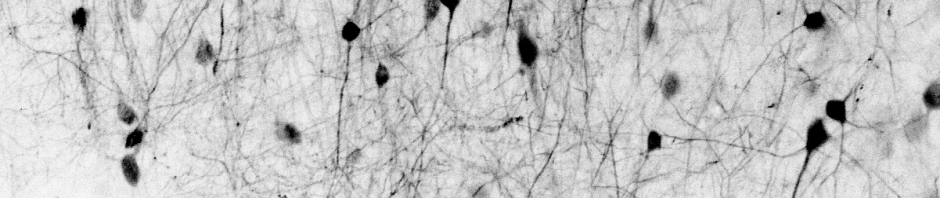
Bagur, Bourg et al. (2022) from the Bathellier Lab in Paris make the interesting finding that the auditory code is represented as temporal sequences of neuronal activity in early auditory processing stages and as spatial patterns in auditory cortex. I am not an expert for auditory cortex, but I found this paper quite compelling and interesting, both in terms of methodological approaches and in terms of concepts.
Sophie Bagur has already published a few very interesting papers that are both excellent and creative and definitely worth a read. For example, in a study published with her as senior author Verdier et al. (2022) on an entirely different topic, they showed that optogenetic stimulation of the medial forebrain bundle could be used to improve behavioral training of mice and replace water restriction protocols very effectively.
Lai, Tanaka et al. (2023) from Albert Lee’s lab wrote a very cool paper where they made rats navigate mentally. In short, they used the spiking output of the hippocampus, which they extracted online, to control a virtual reality that (1) represented themselves in a spatial context (“mental navigation”), or that (2) represented another object in a spatial context (“telekinesis”). Using this approach, the authors tried to show that hippocampus represents mental navigation of the self but also mental navigation of objects in the external world.
A minor issue I had with the paper was that the authors write very prominently that they constructed a low-latency (“real-time”) closed-loop system, feeding back neuronal activity into the virtual environment. However, this ultra-fast feedback is first going through a decoder that uses a 5-s running window, basically eliminating the speed of the feedback loop. This secret is hidden somewhere in the Methods section.
In addition, I had the feeling that the claim of “mental navigation” would require slightly stronger evidence that the animal did not really move physically while performing “mental navigation”. The existing analyses could have been deepened a bit. However, in general I really liked the paper, both for its ideas and for its technical implementation of the brain-machine interface for rats. Definitely worth a read!
Let’s try to dig a bit into the conceptual space around this study. The manuscript made me wonder how different it is whether we mentally move objects (like tetris objects, “telekinesis”) or avatars (like in a 1st person video game, “mental navigation”). Do both situations feel the same for us? We do certainly identify with avatars viewed from a 3rd person perspective (as in many video games). The transition from 3rd person avatars (“mental navigation”) to movable objects (“telekinesis”) seems pretty smooth from my perspective. A pixelized avatar from super mario feels almost like an object, and we treat pacman for sure like an avater, even though it is barely more than an object. There does not seem to be a sharp transition between an eating blob like pacman or snake to something less animated like a tetris element. It seems like introspection might be a good way to better understand how we as humans differentially treat virtual avatars or virtual objects in our mind.
.
.
References
Bagur, S., Bourg, J., Kempf, A., Tarpin, T., Bergaoui, K., Guo, Y., Ceballo, S., Schwenkgrub, J., Verdier, A., Puel, J.L., Bourien, J., Bathellier, B., 2022. A spatial code for temporal cues is necessary for sensory learnin. https://doi.org/10.1101/2022.12.14.520391
Lai, C., Tanaka, S., Harris, T.D., Lee, A.K., 2023. Mental navigation and telekinesis with a hippocampal map-based brain-machine interface. https://doi.org/10.1101/2023.04.07.536077
Verdier, A., Dominique, N., Groussard, D., Aldanondo, A., Bathellier, B., Bagur, S., 2022. Enhanced perceptual task performance without deprivation in mice using medial forebrain bundle stimulation. Cell Rep. Methods 2, 100355. https://doi.org/10.1016/j.crmeth.2022.100355


 A blog about neurophysiology